
Concrete floor installation in Peoria IL - a dry, solid base for whatever goes on top
Old floor cracked, damp or heaving? We dig out, pack the base and pour a new concrete floor that's ready for tile, wood or coating.
- Fully licensed and insured.
- Free in-person estimates.
- We respond within 1 business day.
What goes into a new concrete floor, and what sets the price?
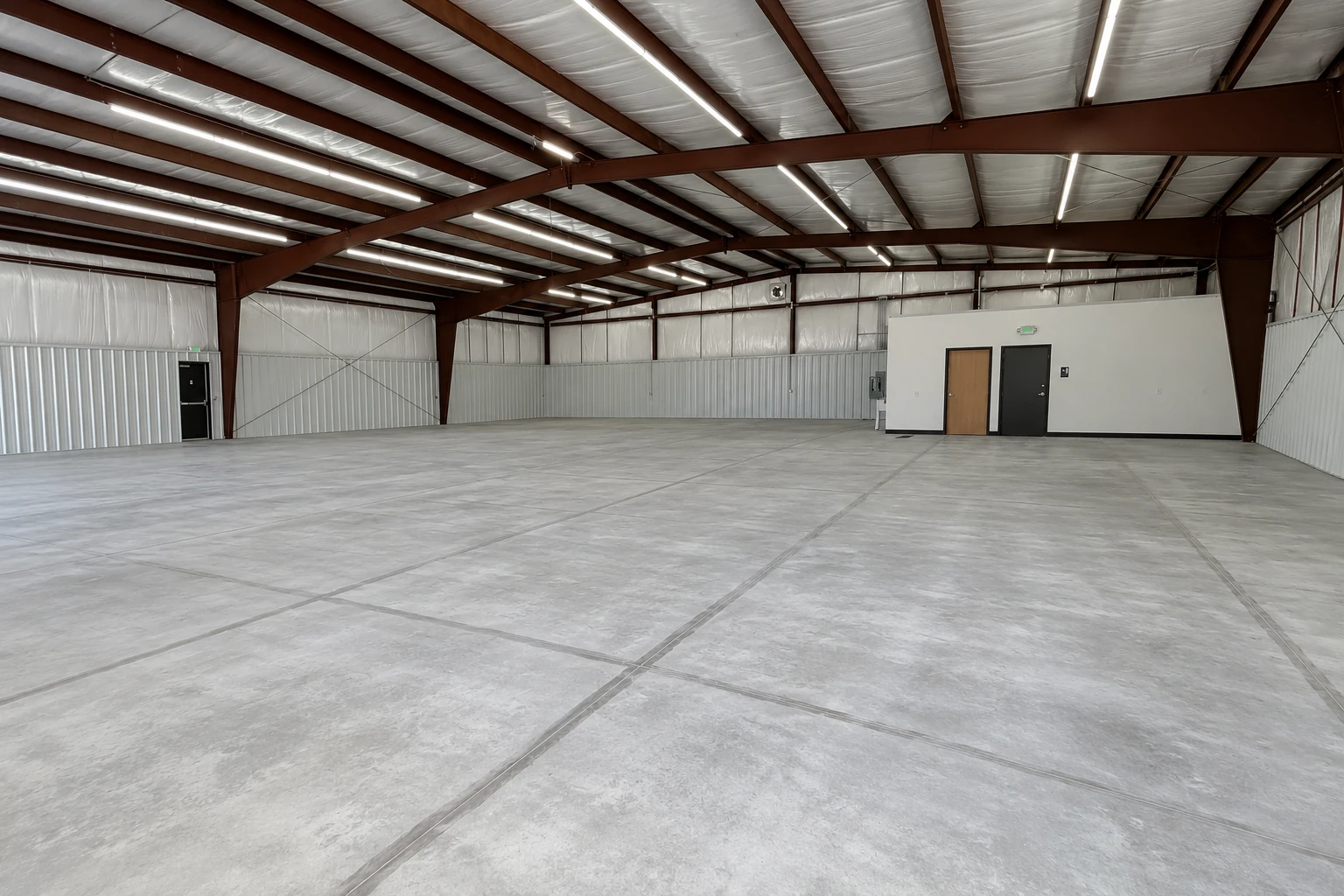
Concrete floor installation in Peoria means pouring a new slab, usually in a basement, an addition or an outbuilding, over a packed base and a moisture sheet, then cutting it into panels so you end up with a dry, solid floor you can finish however you like.
Most folks call us when the old floor is cracked, heaved or damp, or when a new room is going up and needs one, and sometimes the old slab has to come out first, which is where concrete cutting comes in. The price moves with the size of the floor, how much tear-out and digging it takes, how hard it is to get concrete to the spot, and what's going on top, since a floor under tile or wood needs more care underneath than a bare one. The schedule mostly turns on the weather, what the city wants for the job, and how long the concrete has to cure before your flooring goes down. I'll give you your own figure once I've seen the space.
How do you know it's time for a new concrete floor?
Cracks that keep widening
A hairline crack is normal, but cracks that open up, shift or leave one side sitting higher usually mean the dirt under the slab settled or was never packed. Wait too long and the floor gets harder to walk on, and anything you lay over it starts cracking along the same lines.
Damp spots or peeling flooring
Dark patches, a musty smell, or tile and vinyl that lift and bubble usually mean moisture is coming up through the slab because there's a poor sheet under it or none at all. Putting new flooring over that just means paying for flooring twice.
Water sitting in low spots
If water pools in one corner or runs toward a wall instead of the drain, the slab has sunk or was poured out of level to begin with. That standing water keeps feeding damp and mold, and it won't fix itself.
How we handle concrete floor installation
It starts before anything gets poured, with me asking what's going on top of your floor, because tile, wood, carpet or a coating decides how we handle the moisture sheet underneath, and a national floor guide says coverings get the most protection when that sheet sits right against the slab. From there we dig out and pack the subgrade, which is just the dirt and stone the slab sits on, since a base that's only raked level settles later and takes your floor with it. Then we lay the sheet, set rebar, the steel bars that help hold the concrete together, pour, and trowel the top smooth for flooring. We cut control joints, straight lines that give the slab a planned place to crack, early enough that it doesn't pick its own spots, and then it cures, which is the wait while the concrete gains strength before you load it up. I'll be straight with you that a few thin cracks are part of any concrete floor. The base is where I won't budge, because it's hidden on day one and it's the first thing people want to trim from the budget, and I'd rather you have a plain floor on a solid base than a fancy one on loose dirt.
A new floor often connects to other work. If the room gets a door out to the yard, we can pour concrete steps so you're not hopping down onto the grass, and if that door heads toward a pool, we build concrete pool decks too, so the whole run gets planned at once.
Basement floor replacement
This suits an older house where the floor has cracked, heaved or stayed damp for years. We break out the old slab, fix the base and put a proper moisture sheet down before the new pour.
Floor for an addition or new room
This suits anyone building on, since the new floor has to meet the existing house at the right height. We work with you or your builder so the slab is ready for the flooring you've picked.
Shop, barn or outbuilding floor
This suits a workshop or storage building that's been sitting on gravel or dirt. A bare floor like this can be simpler underneath, though we still ask how you'll use it before we pour.
Get a straight price for your new concrete floor
Send us a few details and we'll get back to you within one business day. I'll set a time to come out, look at the space and give you a free estimate on site, and there's no obligation to book.
(309) 306-3513Concrete floor installation in Peoria and nearby cities
In Peoria, the city's Building Inspectors check any construction, remodel or addition that needs a permit, to make sure the work is safe and up to code. The city doesn't spell out whether a stand-alone concrete floor needs one, so I won't guess, and you can always check with Peoria Building Safety. Before we schedule, we look into what the city or village wants for your job, handle the permit paperwork when it's ours to file, and tell you plainly if anything falls on your end.
The city rates weathering on concrete here as severe and designs for winter temperatures as low as -10°F, so we time pours around the cold and plan ahead to keep a fresh floor from freezing. We deal with the same hard winters on jobs in East Peoria and Morton, and we work out toward Bloomington and Normal too.
What happens after you call about a concrete floor?
Call or send us a message
Call (309) 306-3513 or use the form, and we'll get back to you to set up a visit. It helps to tell us roughly how big the floor is and where it sits in the house.
I come out and measure
I walk the space myself, measure and ask a lot of questions, mostly about what's going on top and whether you live in the house. I'll go over the tear-out, base work, moisture sheet and reinforcement with you, so you can see where the money goes and nothing surprises you later.
We sort out permits and dates
Once you're ready, we check what the city or village needs and put the job on the calendar. In cold months the date leans on the forecast, since fresh concrete can't be left to freeze.
We build it and clean up
I work alongside our crew from the ground prep through the pour, finishing, joint cuts and cleanup. Then the floor cures before your flooring goes down, and I'll tell you when it's ready for that.
Frequently asked questions
How much does it cost to install a concrete floor in Peoria?
The cost comes down mostly to the floor's size, how much old concrete and dirt has to come out, and how easy it is to get concrete to the spot. A basement with a narrow stairway takes more labor than an open outbuilding, and a floor going under tile or wood needs more care underneath than a bare one. I'll give you your own number after I've seen the space.
Will my new concrete floor crack?
Probably a little, and that's normal, because a national floor guide says some random cracking should always be expected, even with joints cut close together. The same guide calls it reasonable to see visible cracks in anywhere from none to 3 percent of a floor's panels, which gives you a fair yardstick for judging the floor once it's done.
What is the best way to reinforce a concrete floor?
Reinforcement that's properly sized and properly placed is the way to go, though it won't stop cracking. What it does, according to the same floor guide, is keep the cracks that do form tightly closed, so it's fair to ask any contractor how they plan to reinforce your slab.
How do I keep moisture from ruining my flooring over a concrete floor?
Start with the right sheet under the slab, because moisture coming up through concrete can blister flooring, make its layers come apart, push glue up through the seams and grow mold. The floor guide says plain polyethylene sheet, the kind used in the past, shouldn't be considered for under a slab, so ask what sheet is going under yours and whether it meets the guide's standard.
Can concrete be poured in a Peoria winter?
Yes, with a plan, because a cold-weather guide says fresh concrete should be kept from freezing for about two days after the pour, for most concrete kept at 50°F. That can mean heat, covers or waiting for the right stretch of weather, and we talk through which one fits your job before we set the date.
Can I do the concrete floor work myself on my own home in Peoria?
Yes, in Peoria a homeowner who owns and lives in the house may do any or all of the building work. If you don't live in the property, the city requires licensed contractors, and it recommends a licensed professional for any owner who's unsure.
Peoria, IL
Book a look at your concrete floor
Have the floor's size, where it sits in the house, what's going on top and whether you live there ready, and our first talk will cover a lot more ground.